
In the Philippines, earthquakes are not a question of if, but when. Sitting along the Pacific Ring of Fire, our country is highly prone to seismic activity. From the destructive tremors in Mindanao to the looming threat of the estimated magnitude 7.2 earthquake on the West Valley Fault in Metro Manila, earthquakes are a constant reality that requires proactive preparation.
But while we cannot stop earthquakes, we can reduce their impact. And it all begins at the community level.
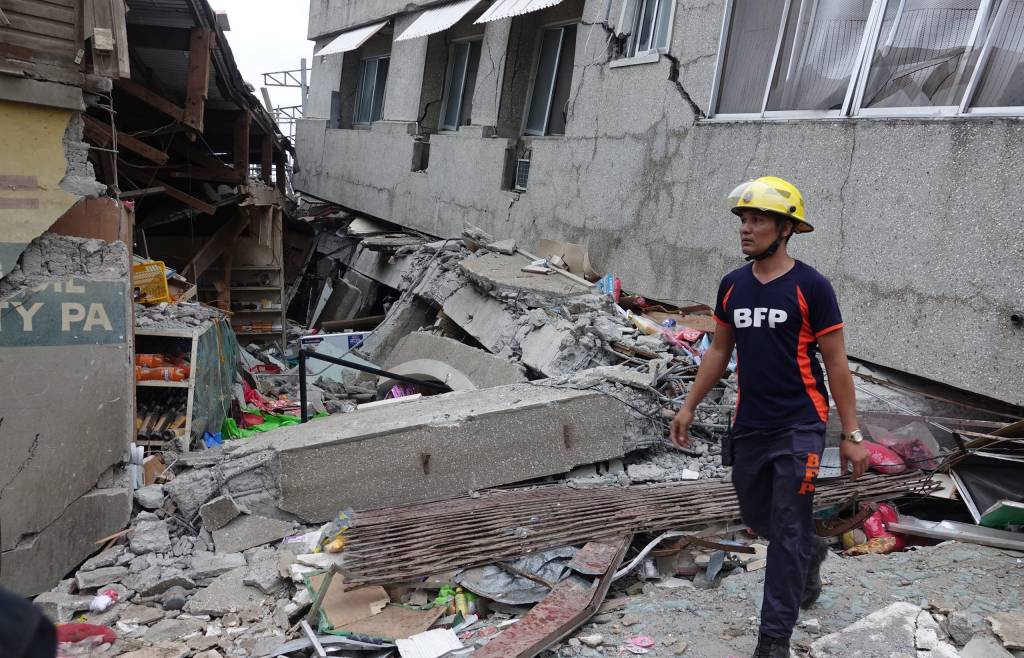
A BFP officer inspects a collapsed building after a strong earthquake in the Philippines, highlighting the need for disaster preparedness. Photo by: Geo Engineer
The Barangay: Ground Zero for Earthquake Preparedness
In the Philippines, disaster resilience begins at the most local level: the barangay. As the smallest unit of government, barangays are at the frontlines of earthquake preparedness, tasked with both protecting lives and reducing vulnerabilities within their communities. This critical role is not just practical, it’s also mandated by law. Under Republic Act No. 10121, or the Philippine Disaster Risk Reduction and Management Act of 2010, each barangay must establish a Barangay Disaster Risk Reduction and Management Council (BDRRMC) and craft a Barangay Disaster Risk Reduction and Management Plan (BDRRMP). These are essential documents that ensure disaster preparedness is woven into local governance and budgeting.
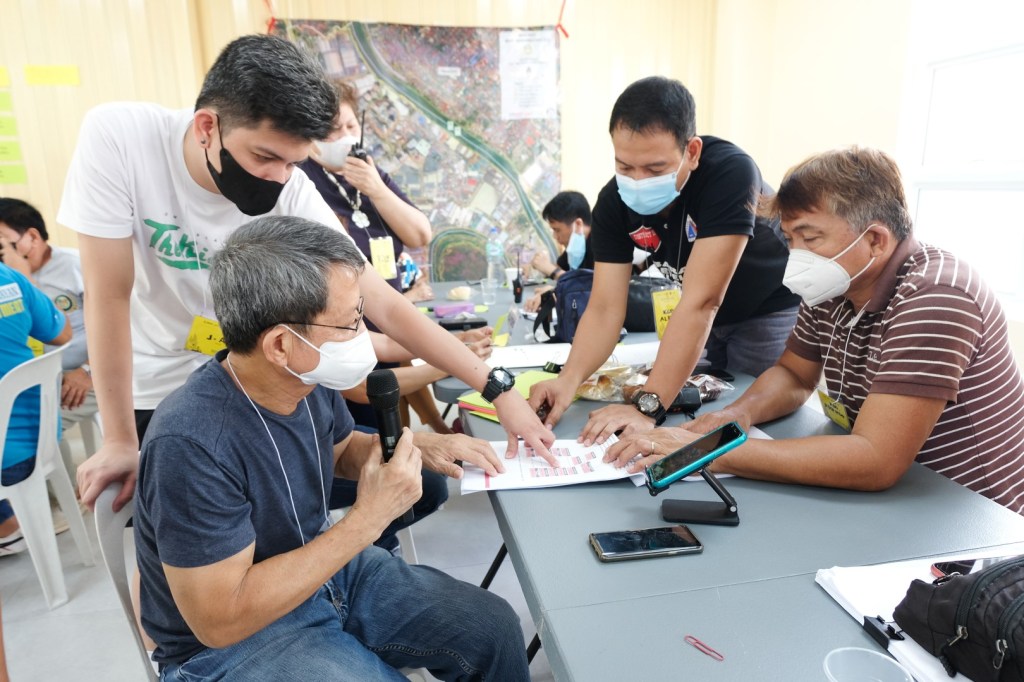
Community leaders and disaster responders collaborate on earthquake preparedness planning during a barangay-level simulation and mapping activity. Photo by: QC DRRMO
The BDRRMP includes risk assessments, hazard mapping, early warning systems, and designated evacuation plans. It also outlines training for barangay officials and tanods in key response competencies like basic first aid, search and rescue, and crowd control. Ideally, the BDRRMP is integrated into the Barangay Development Plan, allowing disaster risk reduction to influence long-term decisions on land use, construction, and public safety.
However, barangay efforts alone cannot cover all aspects of disaster readiness.
The Role of the Local DRRM Plan (LDRRMP)
This is where city-level planning plays a vital supporting role. Local Disaster Risk Reduction and Management Plans (LDRRMPs) provide a strategic framework that consolidates and supports barangay-level plans. These are comprehensive, multi-year documents developed by city DRRM Offices in consultation with barangays and relevant stakeholders. CDRRMPs ensure that city resources—including logistics, infrastructure investment, and technical expertise—are aligned with the needs and gaps identified on the ground. For instance, while a barangay might map out its own evacuation route, the city government ensures that roads remain clear, schools are reinforced as evacuation centers, and emergency health services are mobilized.
But effective disaster response is not only about planning and resources; it also requires clear coordination and command during emergencies.
Incident Command System (ICS): Coordinating Effective Response
Equally crucial is the implementation of the Incident Command System (ICS), a standardized structure used nationwide to coordinate response efforts during disasters, incidents of any size and complexity, enabling multiple agencies to work together efficiently.
When an earthquake strikes, chaos and confusion can derail even the best-laid plans. ICS solves this by assigning clear roles and a chain of command: from the Incident Commander, who oversees the entire operation, to officers handling operations, logistics, planning, and finance. This system is scalable small enough for a barangay drill, and robust enough for a citywide emergency. Training barangay DRRM personnel in ICS protocols ensures they can respond swiftly and in sync with other government units, NGOs, and emergency responders.
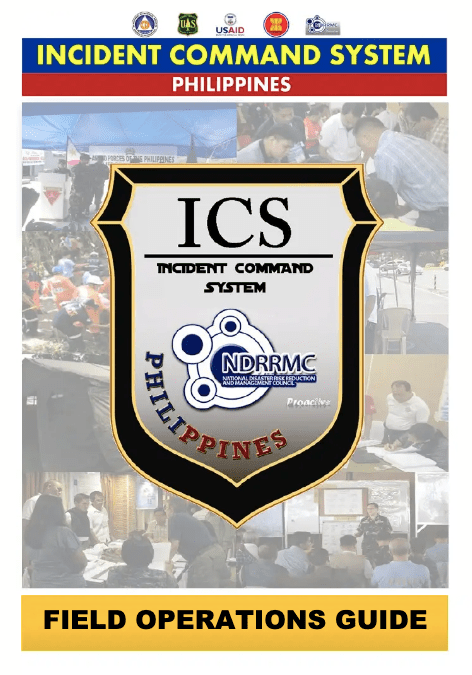
Cover of the ICS Field Operations Guide, published by the National Disaster Risk Reduction and Management Council (NDRRMC), Philippines. Source: Scribd
Ultimately, disaster resilience is strongest when all levels of government, barangays and cities work as one. The barangay, embedded within its community, is best placed to understand local risks and needs. The city, with its broader resources and technical capacity, can amplify and sustain these grassroots efforts. And with ICS providing a common language and structure for response, the entire system functions with clarity, coordination, and purpose.
Earthquakes may be inevitable but with empowered barangays, strategic city planning, and a unified command structure, their impacts can be drastically reduced.
Together, empowered barangays, strategic city planning through the LDRRMP, and a unified command structure via ICS form the backbone of earthquake resilience in the Philippines. Each level of government and community plays a vital role, complementing one another to reduce risks and save lives.
Early Warning & Community Alert Systems
Although earthquakes often strike without prior notice, barangays can establish robust systems to prepare for aftershocks, identify structural vulnerabilities, and relay urgent information to the community quickly and effectively. These measures are essential to minimize harm and coordinate timely responses. Key components include:
- Emergency Communication Lines: Barangay tanods and officials must have access to radios or SMS groups to coordinate during disasters.
- Public Announcement Systems (PA Systems): Installing loudspeakers or sirens can alert residents to evacuate or seek safe ground during post-earthquake emergencies.
- Community Bulletins & Signage: Hazard maps, evacuation routes, and emergency numbers should be visible in barangay halls, waiting sheds, and community centers.
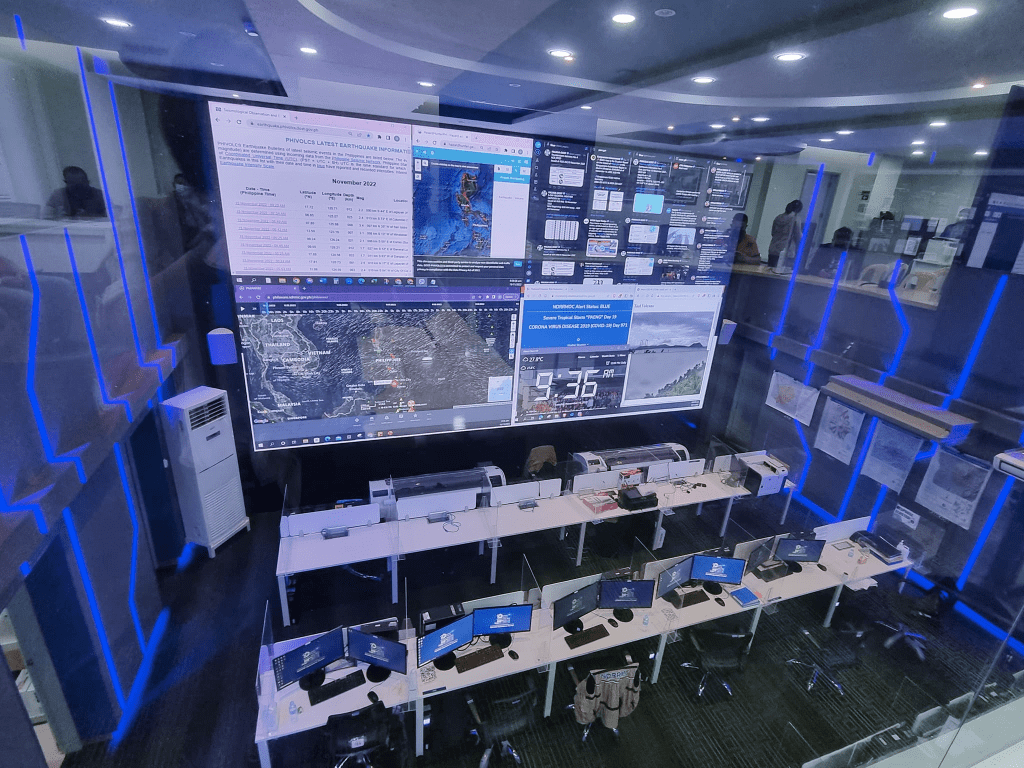
National Disaster Risk Reduction and Management Operation Center. Source: Philippine Information Agency (PIA), 2022.(https://mirror.pia.gov.ph/features/2022/11/24/camarines-sur-emergency-responders-ever-ready-for-disasters)
By establishing and maintaining these systems, barangays can empower their communities with the tools and information necessary to act quickly and safely before, during, and after an earthquake, significantly reducing potential casualties and damage.
Evacuation Plans & Safe Zones
An essential, yet sometimes overlooked, element of earthquake preparedness is knowing exactly where to go and how to get there safely when disaster strikes. Barangays play a vital role in identifying and maintaining designated safe zones. In the Philippines, these are often open spaces such as basketball courts, school fields, and other accessible areas where community members can gather securely after an earthquake.
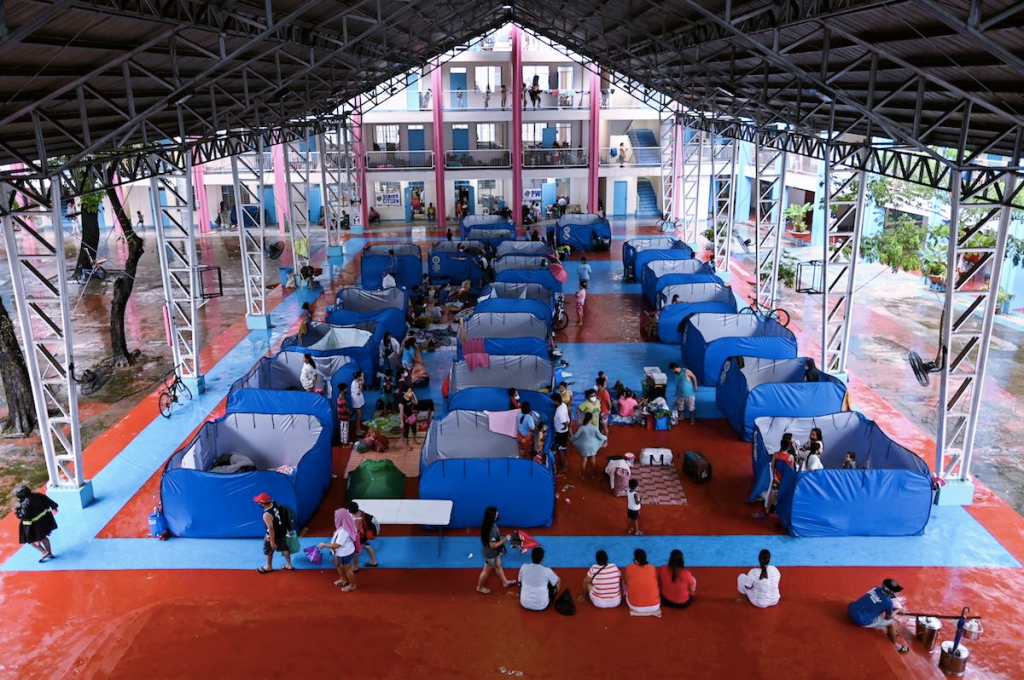
Photo showing a public school used as an evacuation center in Marikina City, Philippines. Source: GMA News Online, 2024.
(https://www.gmanetwork.com/news/topstories/nation/907723/deped-appeals-not-to-use-schools-as-evacuation-centers-ahead-of-la-nina/story/)
To strengthen this critical aspect of preparedness, barangays should:
- Identify and Maintain Safe Zones: Designate and regularly maintain open spaces, such as basketball courts, school fields, and parks, that are spacious, hazard-free, and easily accessible. These locations serve as evacuation points where residents can safely assemble, be accounted for, and receive emergency assistance.
- Conduct Regular Earthquake Drills: Organize community-wide drills for households, schools, workplaces, and barangay offices to practice evacuation and safety procedures. Repeated drills build familiarity, reduce panic, and ensure everyone knows the safest routes and actions to take during an earthquake.
- Train Community/Purok Leaders and Barangay Officers: Provide targeted training in essential skills such as basic search and rescue, first aid, and crowd management. These trained responders can help manage evacuations, assist vulnerable individuals, and maintain order during emergencies.
- Develop Evacuation and Reunification Plans: Create clear, actionable plans for evacuating residents and reuniting families after a disaster. Special considerations should be made for vulnerable groups including elderly residents, children, persons with disabilities, and those with medical needs to ensure their safety and support.
By implementing these measures, barangays enhance community readiness and resilience, empowering residents to act confidently and safely when the ground shakes.
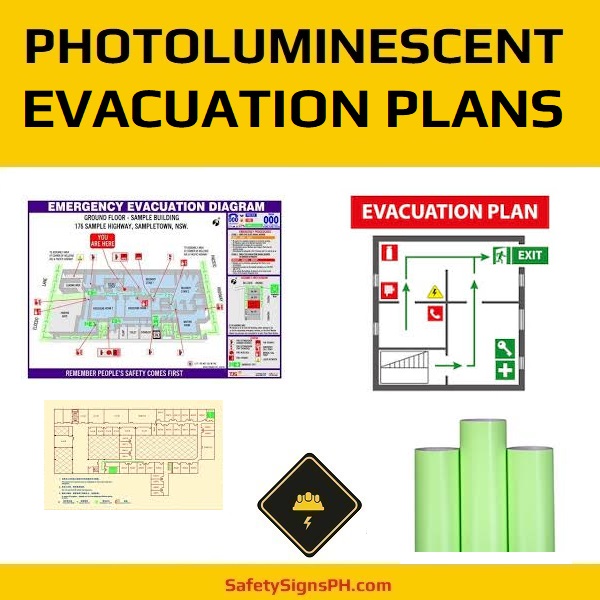
Glow-in-the-dark safety with photoluminescent evacuation plans for clear guidance in any emergency. Photo by: Safety Sign PH
Community Education Saves Lives
A well-informed community is a resilient one. In a prepared barangay, it’s not just the officials who know what to do—every resident understands how to act before, during, and after an earthquake. To build this awareness, barangays should:
Hold Barangay-wide Education Sessions: Conduct regular community workshops and information campaigns to teach residents about earthquake preparedness, safety protocols, and recovery actions.
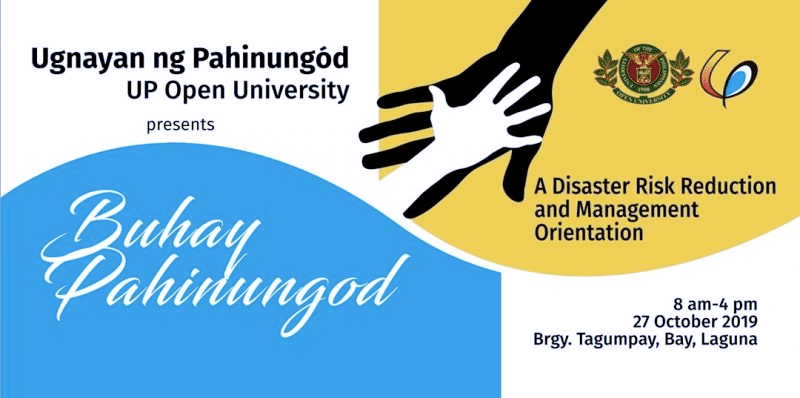
Official event poster of the DRRM Orientation Seminar organized by Ugnayan ng Pahinungód UPOU.
Source: University of the Philippines Open University (UPOU), 2022.
(https://www.upou.edu.ph/news/ugnayan-ng-pahinungod-upou-conducts-drrm-orientation-seminar/)
Promote the “Drop, Cover, and Hold” Technique: Use posters, flyers, and social media platforms to reinforce this life-saving action, ensuring it becomes second nature for all age groups.
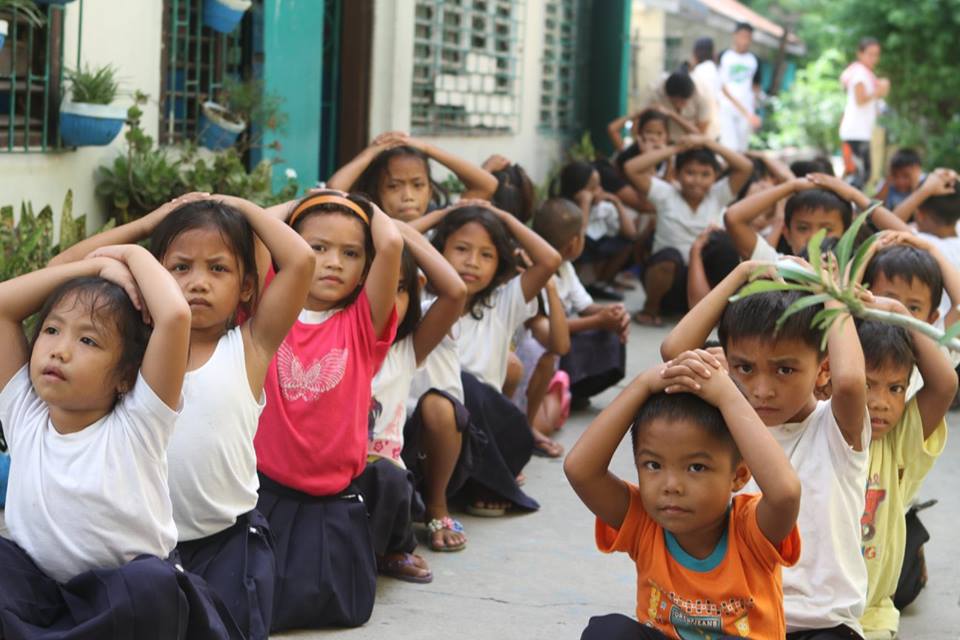
School children participate in an earthquake drill, practicing the “duck, cover, and hold” technique to enhance disaster readiness. Photo by: James Lopes
Encourage the Preparation of “Go Bags”: Advise families to assemble emergency kits containing essentials like food, water, medicine, flashlights, and important personal documents to support survival and comfort during disruptions.
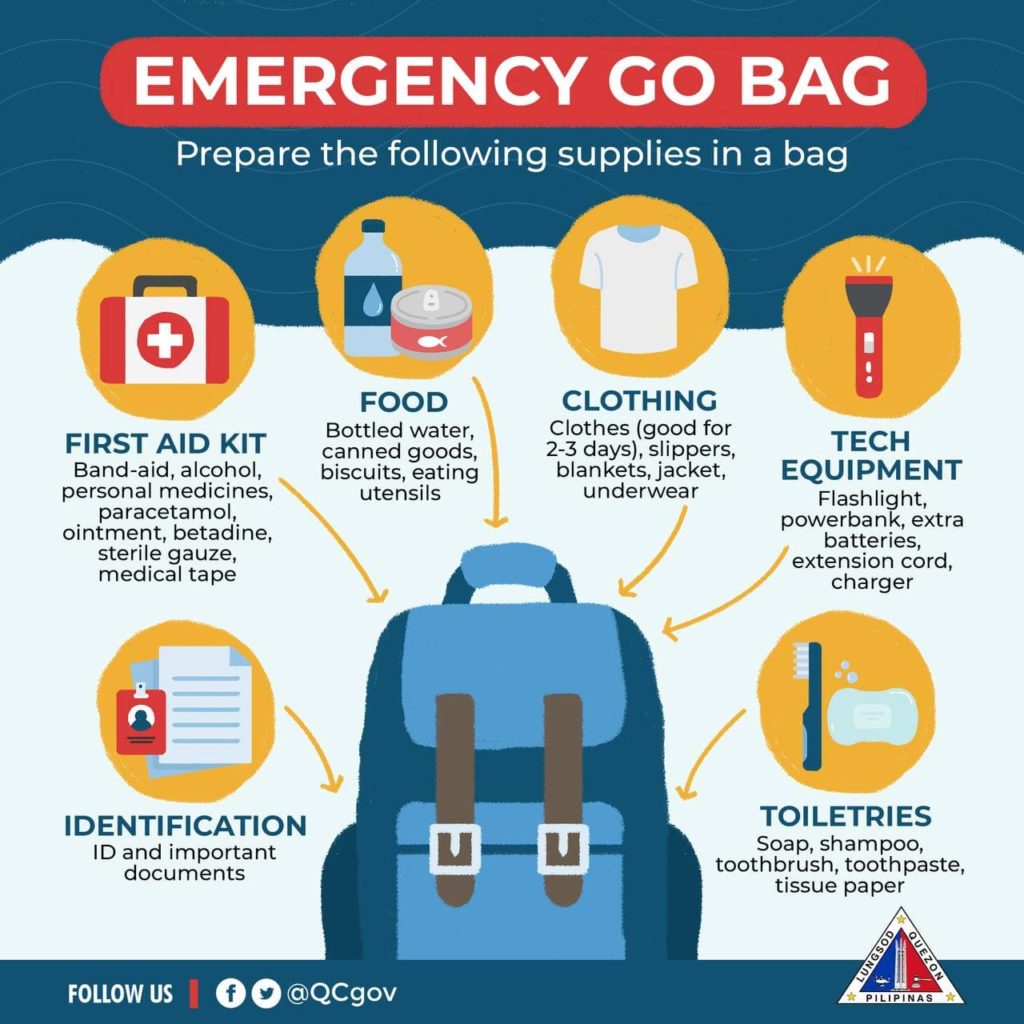
Be disaster-ready with an Emergency Go Bag packed with essentials for survival and safety. Photo by: QC DRRMO
Even brief but focused training sessions can dramatically improve a community’s ability to respond effectively when the earth shakes, ultimately saving lives and reducing panic.
Across the country, many barangays and cities have already begun putting these preparedness strategies into action, proving that with creativity, commitment, and collaboration, disaster resilience is within reach.
Best Practices from Across the Philippines
Barangays nationwide are innovating and leading the way in community-based earthquake preparedness. Notable efforts include:
1. Quezon City’s Barangay DRRM Councils
Every barangay in Quezon City has established its own Disaster Risk Reduction and Management Council (BDRRMC) in compliance with Republic Act 10121. These councils take the lead in hazard mapping, organizing annual earthquake drills, and educating residents about earthquake safety protocols. By embedding DRRM into local governance, barangays become the first line of defense.
2. Baguio City’s Retrofitting and Community Drills
After the devastating 1990 Luzon earthquake, Baguio’s barangays now prioritize retrofitting old structures, particularly schools and public buildings. They collaborate with local engineers and conduct community-wide earthquake drills using the Incident Command System (ICS) to assign roles and responsibilities across various sectors of the community.
3. Makati City’s Use of Digital Hazard Maps
Makati barangays integrate data from DOST’s Project NOAH into local DRRM planning. These digital hazard maps are shared with residents during barangay assemblies and posted online, empowering citizens to understand risk zones and evacuation routes. The maps guide land use decisions and serve as key references during drills and actual emergencies.
4. Surigao del Norte’s Inclusive Multi-Sectoral Drills
Following a 2017 earthquake, Surigao’s barangays began conducting inclusive earthquake drills that involve diverse sectors such as vendors, drivers, fisherfolk, pastors, and youth leaders. By assigning ICS roles and conducting realistic simulations, they ensure that everyone—not just officials—is prepared to respond.
Strengthening Homes and Infrastructure
No amount of preparedness can fully compensate for unsafe buildings. Even the strongest earthquake plan can fall short if structures are vulnerable. Barangays can play an active role in promoting structural safety by taking the following steps:
- Partner with Engineers or NGOs: Collaborate with experts to assess the resilience of critical community infrastructure such as schools, barangay halls, and homes.
- Encourage Proper Building Permits and Inspections: Advocate for strict adherence to building codes and earthquake-resistant standards during construction and renovations.
- Promote Simple Reinforcement Measures: Share practical tips with residents, such as securing shelves, water tanks, and heavy appliances, to minimize injuries caused by falling objects during tremors.
Resilience is a Shared Responsibility
Building earthquake resilience is a collective endeavor that requires the active participation of the entire community. While barangay officials must take the lead in planning and conducting drills, households, youth groups, volunteers, NGOs, and environmental organizations also play crucial roles in raising awareness and strengthening community capacity. When communities are informed, organized, and united, they become better equipped to withstand even the strongest tremors.
Key players in this whole-of-community effort include:
- Barangay officials who lead planning, coordination, and disaster drills
- Households preparing their own emergency kits and family emergency plans
- Youth groups and volunteers spreading awareness and assisting during drills
- NGOs and environmental organizations supporting training, infrastructure strengthening, and community education
Together, these efforts create a resilient community capable of facing the challenges posed by earthquakes.
Path to Resilience
Earthquakes are an inevitable challenge for the Philippines, but their devastating impact can be significantly mitigated through proactive, well-coordinated preparedness efforts anchored at the barangay level. By fostering strong local leadership, empowering communities through education, maintaining safe evacuation zones, ensuring structural safety, and integrating barangay plans with city-wide strategies under a unified command system, the country can build resilient communities that stand ready when disaster strikes. This whole-of-community approach where officials, households, youth, volunteers, NGOs, and government agencies work hand in hand transforms vulnerability into strength, saving lives and safeguarding livelihoods. Ultimately, it is this collective resilience and shared responsibility that will enable the Philippines to weather the tremors of the Pacific Ring of Fire with courage and confidence.
References
Philippine Congress. (2010). Republic Act No. 10121: Philippine Disaster Risk Reduction and Management Act of 2010. https://lawphil.net/statutes/repacts/ra2010/ra_10121_2010.html
National Disaster Risk Reduction and Management Council. (n.d.). Incident Command System (ICS) Field Operations Guide. https://www.scribd.com/document/413019390/ICS-Field-Operations-Guide
Office of Civil Defense. (2016). NDRRMC Memorandum Circular No. 43, s. 2016: Guidelines on the Interoperability of Incident Management Teams (IMTs) and Response Clusters. https://ndrrmc.gov.ph/attachments/article/2758/NDRRMC_Memo_Circular_No_43_s_2016_re_Guildlines_on_the_Interoperability_on_Incident_Management_Team_IMTs_and_the_Reponse_Cluster.pdfNDRRMC+1Studocu+1
Quezon City Disaster Risk Reduction and Management Council. (2021). Quezon City Disaster Risk Reduction and Management Plan 2021–2027. https://www.quezoncity.gov.ph/wp-content/uploads/2021/10/QCDRRMP-2021-2027_Volume-1-8Sept2021.pdf
Department of Science and Technology. (n.d.). Project NOAH (Nationwide Operational Assessment of Hazards). https://noah.up.edu.ph/
World Bank. (2021). Towards a Comprehensive Disaster Risk Management System for the Philippines. https://www.worldbank.org/en/country/philippines/brief/towards-a-comprehensive-disaster-risk-management-system-for-the-philippinesWorld Bank
World Bank. (2019). Insuring the Philippines against Natural Disasters: Case Study. https://documents1.worldbank.org/curated/en/799241548872273775/Insuring-the-Philippines-against-Natural-Disasters-Case-Study.pdfWorld Bank
World Bank. (2011). Climate Risk and Adaptation Country Profile: Philippines. https://openknowledge.worldbank.org/server/api/core/bitstreams/a4a1c553-8974-4ae5-b4c9-2150d78a703f/contentOpen Knowledge Bank
Quezon City Government. (n.d.). Quezon City Disaster Risk Reduction and Management Office. https://quezoncity.gov.ph/departments/quezon-city-disaster-and-risk-reduction-management-office/
Geoengineer.org. (n.d.). Philippines Earthquake Shakes Luxury Tower Block [Video]. https://www.geoengineer.org/videos/x9w1boBZrMRmng73
Al Jazeera. (2022, July 27). Photos: Powerful earthquake strikes Philippines. https://www.aljazeera.com/gallery/2022/7/27/photos-powerful-earthquake-strikes-philippines
Department of Science and Technology. (2015). DOST’s Project NOAH launches new disaster management platform. https://www.dost.gov.ph/index.php/knowledge-resources/news/44-2015-news/876-dost-s-project-noah-launches-new-disaster-mgmnt-platform
Geoengineer.org. (n.d.). Massive earthquake struck Philippines. https://www.geoengineer.org/news/massive-earthquake-struck-philippines
Quezon City Government. (2021). Resolution No. SP-8482, S-2021: Adopting the Quezon City Disaster Risk Reduction and Management Plan 2021–2027 and its Annexes. https://www.quezoncity.gov.ph/wp-content/uploads/2021/08/sp-8482-S-2021.pdfQuezon City Government
Department of Science and Technology. (2013). Project NOAH. https://www.dost.gov.ph/knowledge-resources/news/33-2013-news/157-project-noah.htmlDOST
World Bank. (2022). Case Study: The Philippines – Transferring the Cost of Disasters to the Capital Markets. https://thedocs.worldbank.org/en/doc/58d421407f57c5eb8d0f35ad843ae474-0340012022/original/case-study-Philippines-CAT-bond.pdfThe World Bank Documents
Quezon City Public Library. (n.d.). Quezon City Disaster Risk Reduction and Management Plan, 2021–2027. https://qcpl.quezoncity.gov.ph/catalog/14178Quezon City Public Library
Department of Science and Technology. (n.d.). Project NOAH. https://www.dost.gov.ph/knowledge-resources/news/33-2013-news/157-project-noah.html
World Bank. (2011). Natural Disaster Risk Management in the Philippines: Reducing Vulnerability. https://documents.worldbank.org/en/publication/documents-reports/documentdetail/456511468333585589/natural-disaster-risk-management-in-the-philippines-reducing-vulnerabilityWorld Bank
Climate Laws. (n.d.). Philippine Disaster Reduction and Management Act (RA 10121). https://climate-laws.org/document/philippine-disaster-reduction-and-management-act-ra-10121_eda4Climate Laws
 FILIPINOS FOR NATURE