
Have you noticed that the city feels much warmer than nearby rural areas? That’s not just your imagination, it’s a phenomenon known as the Urban Heat Island (UHI) effect, and it’s becoming increasingly intense in Philippine cities due to rapid urbanization, population growth, and the worsening impacts of climate change.

What Is the Urban Heat Island Effect?
The Urban Heat Island (UHI) effect occurs when cities trap more heat than their surrounding rural areas. This happens because buildings, roads, and other infrastructure absorb and retain heat from the sun during the day and slowly release it at night, making urban areas significantly warmer especially after sunset. Natural landscapes like forests, fields, and bodies of water, on the other hand, have higher albedo (reflectivity) and evaporative cooling properties that help maintain lower temperatures.
Urban areas also tend to have less vegetation, which means fewer trees to provide shade and release moisture into the air through evapotranspiration, a natural cooling process. The widespread use of concrete, asphalt, and dark roofing materials combined with heat from vehicles, industries, and buildings intensifies this warming effect.
A recent study in Metro Manila (Dela Peña & Ocampo, 2022) showed that land surface temperatures (LST) in densely built-up areas were significantly higher by as much as 4–5°C compared to parks and vegetated zones. Similarly, research in Cebu City (ASRJETS, 2023) recorded a 3°C increase in average LST between 2010 and 2018, directly tied to the rapid replacement of green areas with concrete structures and asphalt roads.
Globally, the UHI effect can raise nighttime temperatures in cities by up to 7°C compared to surrounding areas. In tropical countries like the Philippines, where cities already face high baseline temperatures and humidity, this additional heat can pose serious risks to public health, energy systems, and overall urban livability.
The impact is most pronounced in densely populated districts with limited tree cover such as parts of Quezon City, Manila, and Makati where residents often experience intense heat even after sunset. Without intervention, this trend is expected to worsen as urban sprawl continues and climate change drives global temperatures even higher.
Why Are Cities in the Philippines Heating Up?
Several interrelated factors contribute to the rising temperatures in Philippine urban areas, making them especially vulnerable to the Urban Heat Island (UHI) effect:
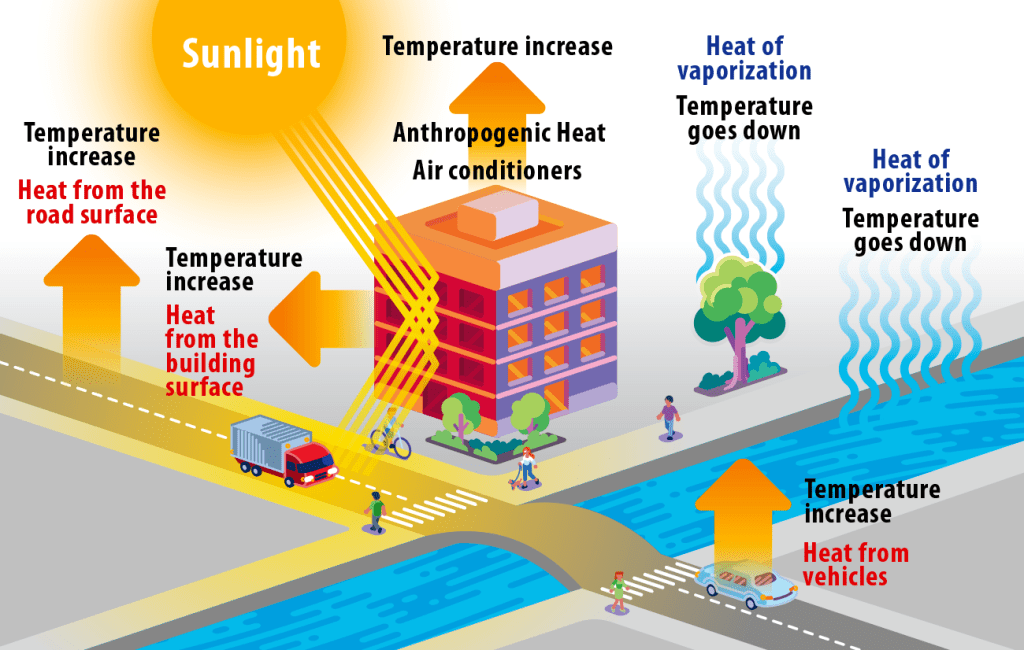
UHI are intensified by concretes, vehicles, and buildings, while greenery helps cool the city.
- Extensive concrete and asphalt surfaces that absorb and retain heat.
Urban areas are dominated by roads, parking lots, and buildings made from materials like asphalt and concrete that absorb heat during the day and slowly release it at night. This thermal storage prevents temperatures from cooling down, especially in densely built environments like EDSA in Metro Manila or downtown Cebu. The Philippines’ year-round tropical heat only intensifies this phenomenon. To mitigate this, Quezon City has begun implementing cool pavement technologies and lighter-colored road surfaces in select barangays. These materials reflect more sunlight than traditional dark asphalt, helping reduce surface temperatures. The Department of Public Works and Highways (DPWH) has also explored using permeable pavements in some urban drainage projects reducing both flooding and retained heat in built environments.
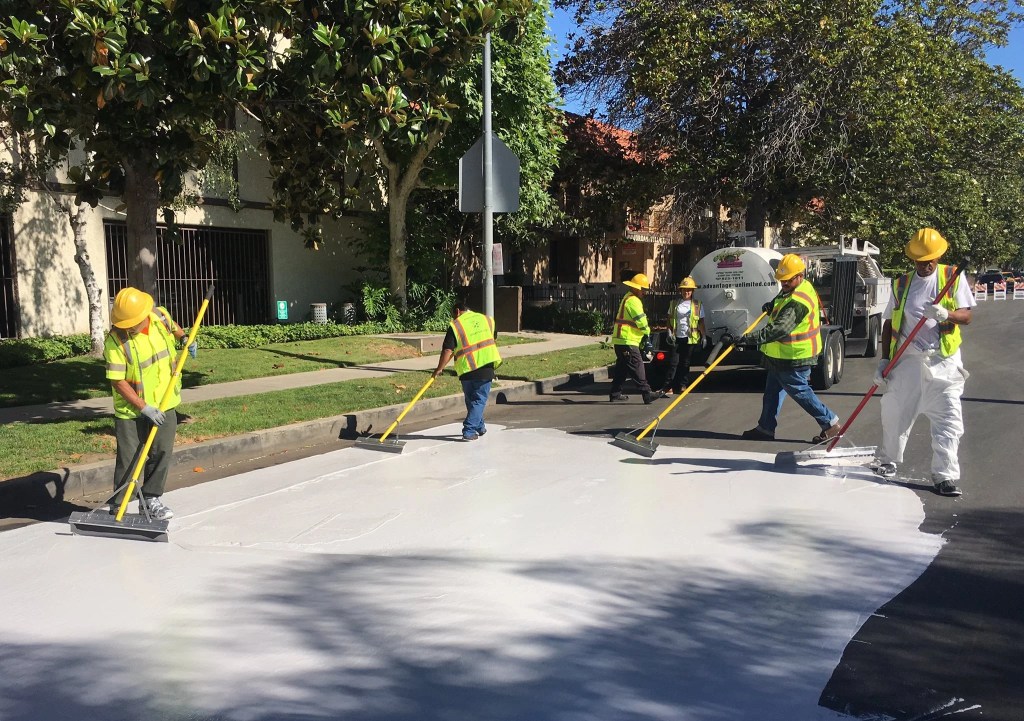
Workers apply reflective pavement to help lower surface temperatures and reduce urban heat buildup.
2. Sparse vegetation and tree cover, limiting natural cooling.
Vegetation plays a crucial role in urban cooling by providing shade and releasing moisture into the air through evapotranspiration. Unfortunately, rapid urbanization often means trees and green spaces are cut down or neglected, limiting the natural cooling benefits they provide. Many Philippine cities fall well below the World Health Organization’s recommended standard of 9 square meters of green space per person. In response, Baguio City launched its Urban Forest Restoration Program, which includes the reforestation of urban parks and the protection of tree-lined corridors. Similarly, Marikina City has maintained its well-known network of green belts, bike lanes, and riverside parks, showing how sustained investment in greenery can help moderate urban temperatures and enhance livability.

Evapotranspiration helps cool urban areas by cycling water through plants and soil, reducing heat and improving air quality.
3. Vehicle emissions and air conditioners adding heat and pollutants to the air.
Urban heat is also compounded by heat-emitting sources such as vehicles, air conditioning units, and industrial processes. During rush hour, areas like Ortigas, Cubao, and Divisoria become literal “heat pockets,” where thermal energy and air pollutants accumulate. This not only worsens UHI but also contributes to poor air quality. To combat this, Pasig City launched a Green Transport Program that includes expanding bike lanes, deploying electric tricycles (e-trikes), and promoting car-free zones during weekends. These efforts aim to reduce vehicle emissions and the associated heat load. Additionally, green building incentives in cities like Taguig encourage the use of energy-efficient cooling systems, which emit less waste heat.

Incorporating e-trikes into urban transport helps reduce emissions and heat, easing the effect of UHI.
4. Poorly planned urban growth without enough open or green spaces
Rapid, unregulated development often leads to overcrowded urban spaces with limited open areas or ventilation corridors. Buildings are packed tightly together, blocking airflow and trapping heat within neighborhoods. This is especially evident in cities that lack comprehensive zoning policies or climate-resilient urban plans. However, cities like Iloilo are showing the way forward. The Iloilo City Green Urbanism Master Plan integrates climate-adaptive zoning, wider setbacks, and the preservation of public open spaces. It also ensures that future developments incorporate natural ventilation, drainage, and greening requirements—helping to cool neighborhoods while making them more resilient to climate extremes.

Iloilo City strengthens its climate resilience by integrating green urbanism in its updated local climate change action plan .
5. Dry Season Intensifies Heat Stress
The dry season in the Philippines, from March to May, dramatically intensifies UHI effects. A 2023 geospatial study using MODIS satellite data confirmed that urban areas like Manila, Iloilo, and Davao experience significantly higher land surface temperatures during this time compared to surrounding rural zones. This seasonal trend is not merely climatic—it is structurally tied to how cities are built and how green (or gray) they are. To prepare for this seasonal heat stress, Davao City has incorporated heat mapping and greening strategies into its local climate adaptation plans. These include the creation of pocket parks and “cooling corridors” in highly urbanized barangays, which aim to lower peak temperatures and provide safe, shaded spaces for residents.
What Are the Consequences?
The UHI effect doesn’t just make us uncomfortable—it can also lead to:
- Increased electricity demand and energy costs (from air conditioning)
- Worsening air quality
- Higher risk of heat-related illnesses, especially among the elderly, children, and outdoor workers
- Disrupted ecosystems and declining biodiversity in urban areas
According to the Climate Change Commission (CCC) of the Philippines, the rise in urban heat contributes significantly to climate-related health risks. In its policy statements, the CCC has called for better urban planning and increased green spaces to combat these effects (climate.gov.ph).
What Can We Do About It?

Green infrastructure reduces Urban Heat Island effects by providing shade, cooling surfaces, and natural airflow in the cities.
Combating the UHI effect requires both systemic change and community action. Here are practical steps we can all take:
Green Your Space
Even small actions like planting a tree, keeping potted plants on your balcony, or starting a community garden can reduce heat and improve air quality. Urban forests, as the CCC notes, are crucial in regulating city temperatures.
Advocate for Urban Green Infrastructure
Support policies that promote green roofs, vertical gardens, and shaded walkways. These structures not only cool buildings but also absorb CO₂ and support urban biodiversity.
Choose Reflective and Sustainable Building Materials
White or light-colored roofs and pavements reflect more sunlight and absorb less heat, which helps cool neighborhoods.
Reduce Your Carbon Footprint
Walk, bike, or use public transportation when possible. Less traffic means less heat and pollution in our communities.
Practice Energy Efficiency
Turn off unused electronics, switch to LED bulbs, and unplug devices when not in use. Lowering your household energy use means less heat generation and fewer emissions.
Local Change, National Impact
The Urban Heat Island effect may seem like a city-level issue, but it’s part of a broader climate story. The National Climate Change Action Plan (NCCAP) recognizes UHI as a climate impact that must be addressed through resilient, nature-based solutions particularly in fast-growing cities like Manila, Quezon City, Cebu, and Davao.
As individuals, we can start small. As communities, we can push for green, inclusive urban policies. The more we act together, the cooler literally and figuratively our cities can become.

Driving climate action and resilience through the National Climate Change Action Plan (NCCAP).
References
- Dela Peña, L.C., & Ocampo, D.R. (2022). Assessment of Intra-Urban Heat Islands in Manila Using Remote Sensing and GIS. MDPI Remote Sensing
- Baguio, J.V. et al. (2023). Land Surface Temperature and Urban Heat Islands in Cebu City. ASRJETS Journal
- Estrella, J., & Tongco, M.D. (2023). Heat-Health Risk in the Philippines Using Remote Sensing Data. ISPRS Archives
- Climate Change Commission. (2022). Urban Forests Help Curb Urban Heat Islands. climate.gov.ph
- Climate Change Commission. (2011). National Climate Change Action Plan (NCCAP) 2011–2028. PDF
- Reuters. (n.d.). Urban heat island effect [Illustration]. Reuters Graphics. https://graphics.reuters.com/
- DOST-PCIEERD. (n.d.). Why it’s getting hotter in cities, and why it matters. https://pcieerd.dost.gov.ph/
- Asian Development Bank. (2014). Electric tricycles for sustainable transport in the Philippines. https://www.adb.org/news/videos/electric-tricycles-sustainable-transport-philippines
- World Health Organization. (n.d.). Why it’s getting hotter in cities, and what we can do. Retrieved from https://www.who.int
- Department of Public Works and Highways. (n.d.). Why it’s getting hotter in cities, and what we can do. Retrieved from https://www.dpwh.gov.ph
- Province of Iloilo. (2024). Climate adaptation through sustainable energy and green initiatives [Photograph]. Iloilo Provincial Government. Retrieved from https://www.iloilo.gov.ph

 FILIPINOS FOR NATURE