
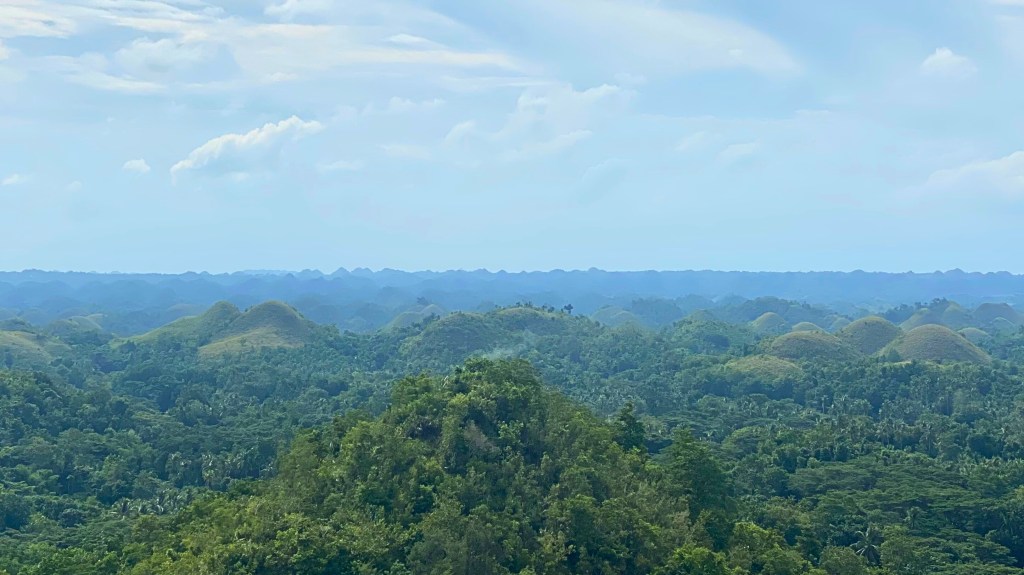
Photo by: Filipinos for Nature, Inc.
Bohol has a way of inviting you in slowly.
It doesn’t greet you with blaring neon or endless noise. Instead, it welcomes you with the soft shuffle of leaves in the breeze, the quiet glide of a boat over emerald water, and the gentle, almost shy gaze of a creature you’ve only ever seen in photographs.
When we visited last June, we went expecting the famous sights; the hills, the beaches, the rivers. But looking closer, what we found was a living landscape: a place where beauty isn’t static, and where every postcard-perfect scene is the result of a delicate balance between nature and people.
These five windows only scratch the surface, but each offers a glimpse into Bohol’s ecological soul.
Window 1: The Tarsier’s Gaze
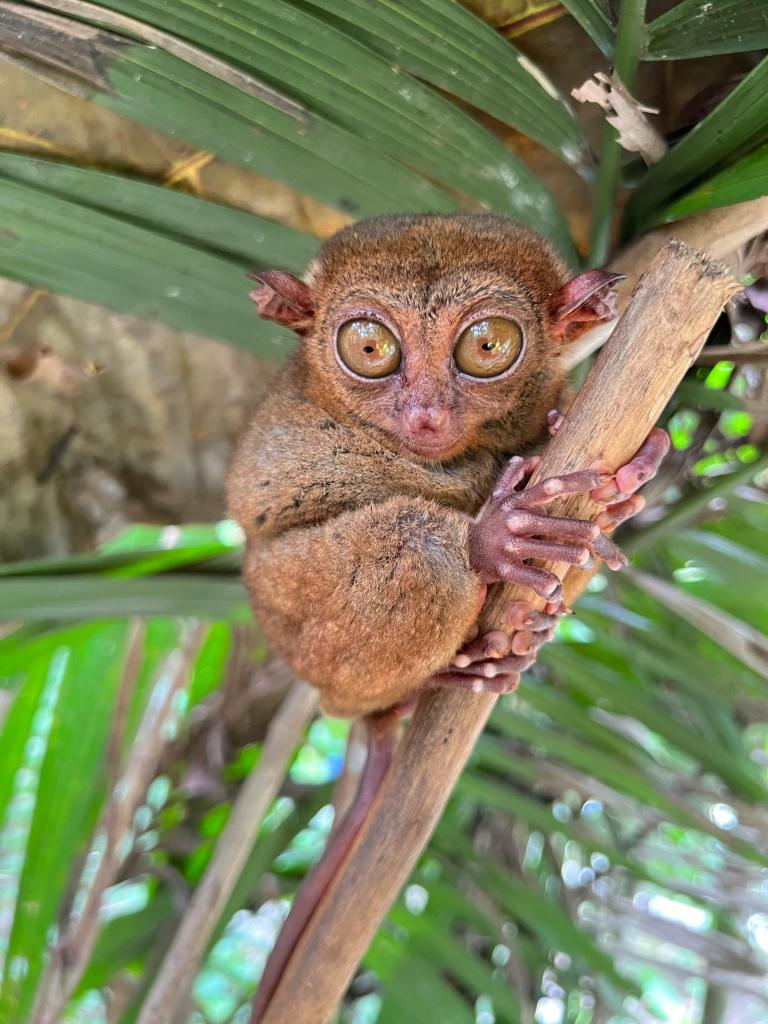
Photo by Denise Allyson Resurreccion
In the dappled light under the canopy, I spot it, barely larger than our hands, clinging to a branch with delicate fingers. The Philippine tarsier’s eyes are perfectly round, reflecting a thousand years of evolution in this forest.
Here, the guides speak softly, reminding us that tarsiers are extremely sensitive to noise and touch. Stress can kill them. This fact lingers in our minds; a reminder that some encounters with nature should remain brief, respectful, almost reverent.
It’s easy to fall in love with such a tiny creature. However, it’s harder to accept the responsibility that comes with that love.
Window 2: The Chocolate Hills
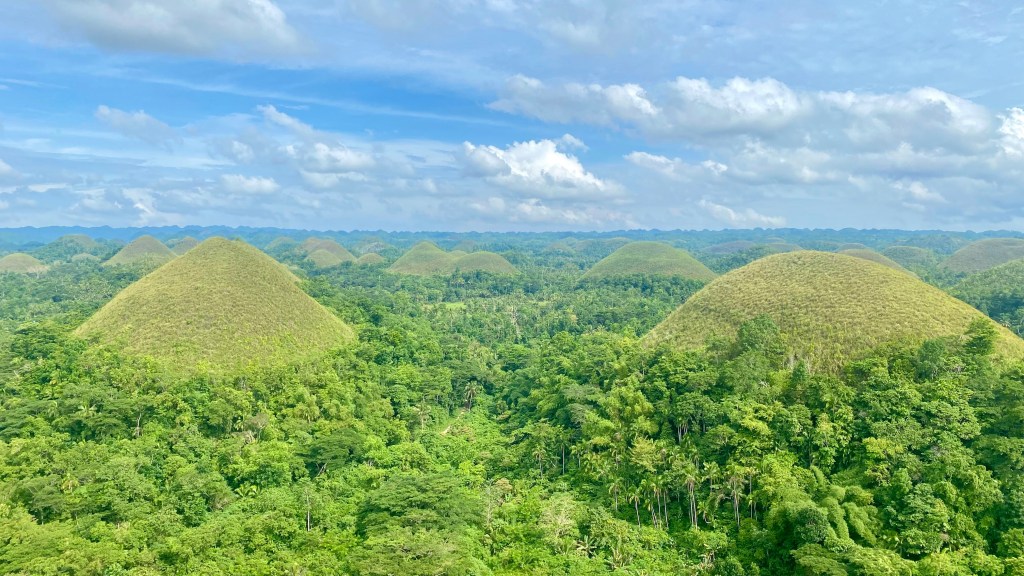
Photo by: Filipinos for Nature, Inc. 2025
We climbed to the viewing deck expecting a field of brown domes, the kind you see on postcards. But June’s rains had cloaked them in green, hundreds of mounds stretching to the horizon like a surreal, rolling sea.
Scientists tell us these hills are made of ancient coral deposits, uplifted and shaped over time. But standing there, sun on my face, wind on my skin, I think less of geology and more of resilience. The hills are part of a larger watershed, feeding rivers, replenishing soil, and quietly holding the land together.
Tourists come for the view. Nature stays for the work.
Window 3: The Beach

Photo by: Filipinos for Nature, Inc. 2025
The sand is fine, almost powdery, and warm underfoot. Small crabs scuttle sideways, leaving delicate etchings in the wet shoreline. Out beyond the shallows, the sea shifts from turquoise to deep blue, hiding coral gardens that protect the coast from storms.

Photo by: Filipinos for Nature, Inc. 2025
We often think of beaches as leisure spaces, but here, they are nurseries. Sea turtles nest in certain areas, and local boatmen keep to designated mooring spots to protect the coral. I watch as a fisherman pulls in a small net, his catch modest, but enough for the day.
The ocean gives, but only if we let it breathe.
Window 4: The Loboc River

Photo by: Filipinos for Nature, Inc. 2025
The Loboc River glides like green silk between walls of palms and ferns. On the boat, the air is cooler, the sound of water folding into itself a constant backdrop. Children wave from the banks. Somewhere in the canopy, a bird calls.

Photo by: Filipinos for Nature, Inc. 2025
This river is a mirror, it reflects not only the sky above but the health of the forest upstream. Clear water means strong roots, living soil, and trees holding the land in place. It’s not a luxury; it’s a lifeline.
A guide points out a cluster of nipa palms, explaining how their fronds are woven into roofing by local hands. Nature’s gifts here aren’t just beautiful; they’re practical, sustaining livelihoods as much as landscapes.
Window 5: The Man-Made Forest
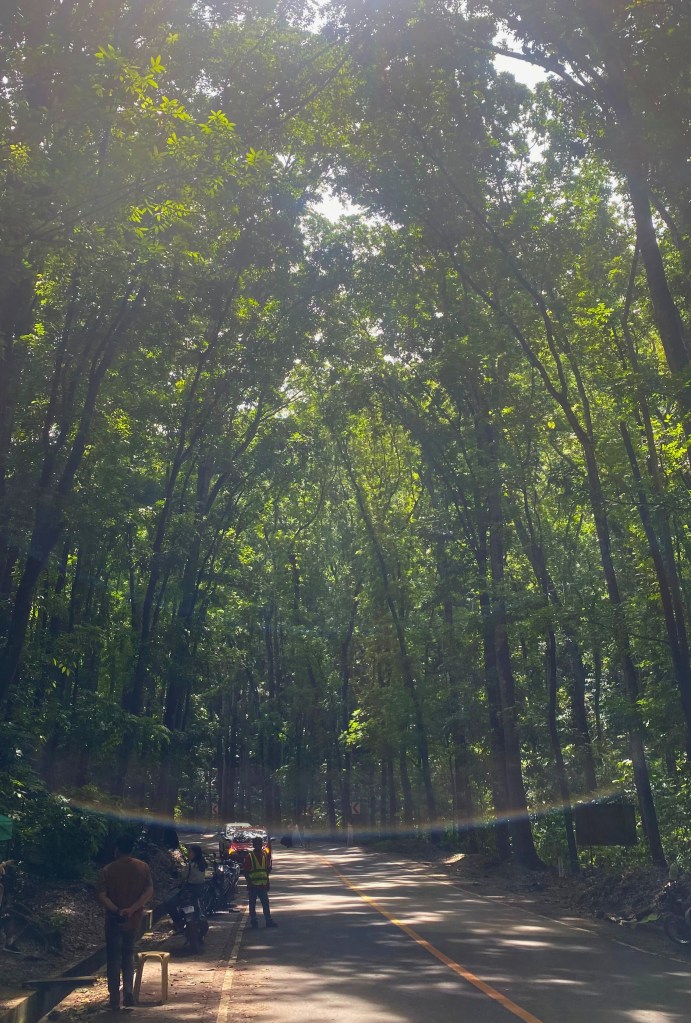
Photo by: Filipinos for Nature, Inc. 2025
One moment, you’re driving under the sun. The next, you’re swallowed by shade. The temperature drops instantly. Straight, tall mahogany trunks rise like cathedral pillars on both sides of the road.
It feels magical, until you learn the history. This is a reforestation project from decades past, planted to combat erosion. While undeniably green, it’s a monoculture, lacking the layered life of a native forest. No birds flitting between fruiting trees. No understory alive with ferns and orchids.
It’s a striking reminder: planting trees is good, but planting diverse trees is better. Forests aren’t just about height and shade, they’re about complexity.
A Closing Glimpse

Bohol’s beauty is easy to see. Its fragility takes more effort.
Every hill, river, and shoreline here is the result of both natural forces and human choices. Tourism can protect or destroy; conservation can be intentional or accidental.
As visitors, we get to choose our role.
Will we take only the photo, or also take the lesson home?

 FILIPINOS FOR NATURE