
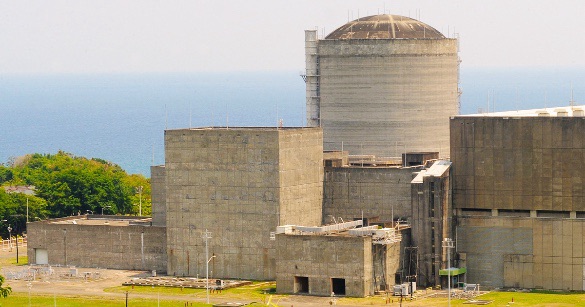
Photo by Ian Fulgar / ianfulgar.com
The reopening of the Bataan Nuclear Power Plant (BNPP) has been a continuous topic of discussion. It was initially completed in 1980 but remained unopened and was officially shut down in 1986 due to political and safety concerns, resulting in significant economic loss (Ong et al., 2022). Since nuclear power has been considered a potential low-carbon energy source, the BNPP continues to be examined as a possible solution to the country’s growing energy demand. However, if the intention behind reopening the plant is for national development, why does its reactivation remain a highly debated issue?
The Bataan Nuclear Power Plant is located in Morong, Bataan. As noted by Navarro (2022), its construction began in 1976 amid strong anti-nuclear protests while former President Ferdinand Marcos Sr. was in office. By 1986, when construction was fully completed, operations were halted under the directive of former President Corazon Aquino. The plant was shut down before it could produce commercially accessible electricity. This decision contributed to long-standing public skepticism toward nuclear energy, a perception that persists today (Yap, 2021).
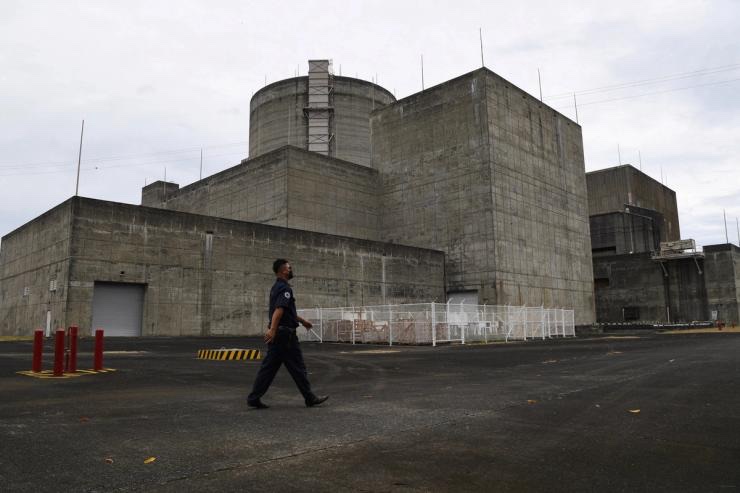
Photo from Wikimedia Commons (CC BY-SA)
Research conducted by Navarro (2022), which summarized findings by Yap (2021), outlined both the advantages and disadvantages of the BNPP. Among its benefits are low operational costs, reliability, and the ability to generate stable power. Unlike fossil fuels, nuclear power produces minimal air pollution, and its fuel source—uranium—is relatively abundant. However, the drawbacks are equally significant. The construction of nuclear power plants is extremely costly, and uranium poses serious safety hazards. While nuclear facilities may not emit air pollutants, they generate radioactive waste, which presents long-term environmental and health risks. These factors highlight the profound impact nuclear power plants can have on both society and the environment.
Regarding public awareness, particularly among students, findings reported by Santos (2024) indicate that college students generally understand the environmental and economic advantages and disadvantages of nuclear power. However, one critical aspect often overlooked in the BNPP debate is the discussion of safety measures, regulations, and emergency preparedness required before, during, and after any potential reopening. Beyond historical and technical explanations, educational materials on nuclear energy should be further integrated into academic discourse, especially within environmental science–related subjects.
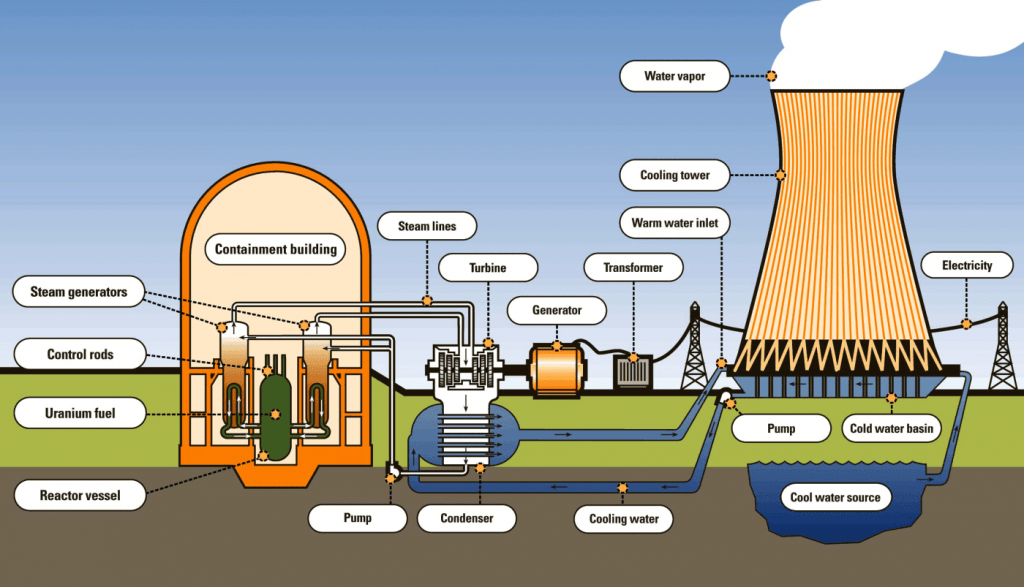
Source: Wikimedia Commons (public-domain/educational schematic of a nuclear power plant)
The BNPP holds the potential for reopening, but only with careful consideration, extensive education, and consistent maintenance. Information on nuclear energy must be clearly disseminated to explain both its benefits and risks, enabling the public to make informed judgments about its future. When discussions about reviving the BNPP re-emerge, every Filipino should be equipped with knowledge and perspective. With proper governance and transparency, nuclear power could potentially contribute to addressing the Philippines’ energy, economic, and environmental challenges.
About the Author
Cassandria Dominique D. Fernandez is a college student whose writing explores energy policy, environmental sustainability, and public understanding of science-based decision-making in the Philippine context.
References
Navarro, A. M. (2022). The implications of developing a Philippine nuclear energy program (No. 2022-61). PIDS Discussion Paper Series.
https://www.econstor.eu/handle/10419/284598
Ong, A. K. S., Prasetyo, Y. T., Salazar, J. M. L. D., Erfe, J. J. C., Abella, A. A., Young, M. N., … Redi, A. A. N. P. (2022). Investigating the acceptance of the reopening Bataan Nuclear Power Plant: Integrating protection motivation theory and extended theory of planned behavior. Nuclear Engineering and Technology, 54(3), 1115–1125.
https://www.sciencedirect.com/science/article/pii/S1738573321005209
Santos, J. V. L. (2024). Exploring nuclear power perceptions among college students in regions surrounding Bataan Nuclear Power Plant. Philippine Journal of Science, 156.
https://openurl.ebsco.com/EPDB:gcd:9:585945/detailv2
Yap, J. (2021). Towards a balanced assessment of the viability of nuclear energy in the Philippines. Journal of Environmental Science and Management, 24(2).
https://www.ovcre.uplb.edu.ph/journals-uplb/index.php/JESAM/article/view/606


 FILIPINOS FOR NATURE